
A book of shelf-stable foods and pantry recipes — the low-tech preserving methods that sit alongside a freezer and a shelf of cans rather than replacing them.
Affiliate link: we earn a commission if you buy, at no extra cost to you. The description above comes from the seller’s own page and we have not independently verified it. Details
See the contents →Freeze dried shelf life is quoted as 25 or 30 years on almost every label, and that number is real — for a specific package, holding a specific kind of food, kept in a specific place. Change any one of those three and the honest answer drops fast, sometimes to a matter of weeks. It is worth knowing which of the three you are changing.
Why freeze dried food keeps at all
Freeze drying freezes the food solid and then drops the pressure so the ice turns straight to vapor without ever melting. What comes out is the original structure with the water removed — typically down to a couple of percent residual moisture, far drier than a dehydrator can reach.
That dryness is the whole preservation mechanism. Bacteria, yeasts and molds need available water, and below a water activity of roughly 0.6 nothing microbial grows. It is not sterilized — the microbes are still in there, dormant — it is dried below the point where they can do anything. Put water back and the clock restarts immediately, which is why a rehydrated pouch is as perishable as a fresh cooked meal.
So the food does not spoil in the usual sense. It degrades chemically instead, and the two reactions that matter are fat oxidation and vitamin loss. Both are driven by oxygen and both accelerate with heat.
What the 25-year number assumes
- A #10 steel can, double-seamed, with an enamel lining and an oxygen absorber inside — not a pouch, not a jar, not a bag.
- Low-fat food. Fruits, vegetables, plain starches. Fat is the ingredient that ages.
- Storage at cool room temperature or below. Manufacturers usually cite something around 55-60°F for the long numbers.
- Unopened, from the day it was canned rather than the day you bought it.
| Item | Sealed #10 can | Once opened | Limiting factor |
|---|---|---|---|
| Fruit, vegetables | 25-30 years | 6-12 months | Moisture, vitamin loss |
| Plain rice, potato, pasta | 25-30 years | 6-12 months | Moisture |
| Freeze dried meat | 10-15 years | 3-6 months | Fat oxidation |
| Eggs, dairy, cheese | 5-10 years | 1-3 months | Fat oxidation |
| Complete meal pouches | 7-10 years | Same day | Added oils, seal type |
| Home freeze dried, Mylar | 10-25 years | Weeks to months | Residual moisture, seal |
The meal pouches are the honest disappointment in that table. They are the format most people buy, they contain oil and seasoning for palatability, and their seal is a foil laminate rather than steel. Seven to ten years is a good run for one. Nobody hides this — it is printed on the box — but the 25-year figure from the can range gets applied to the whole category in people’s heads.
The opened can is where plans fall apart
The moment you break the seal, three things change at once: oxygen floods in, humidity from the room starts being absorbed by food that is drier than anything around it, and the oxygen absorber inside is spent within minutes.
Sellers of this food put opened freeze dried at roughly 6 to 12 months and opened dehydrated food at 3 to 12 months, with the plastic snap lid on and the can in a cool dark place. In a humid kitchen in August, treat the short end of those ranges as the real one. Freeze dried food is hygroscopic — it will pull water out of the air enthusiastically, and once it has softened it is on a normal spoilage timeline again.
The design lesson is about can size, not storage technique. A #10 can holds a lot of servings. If your household will not get through one in six months, buy the same food in smaller cans or pouches even though the cost per calorie is worse, because a 25-year can that you throw out half of after a year has a real shelf life of one year.
Home freeze dried food is a different product
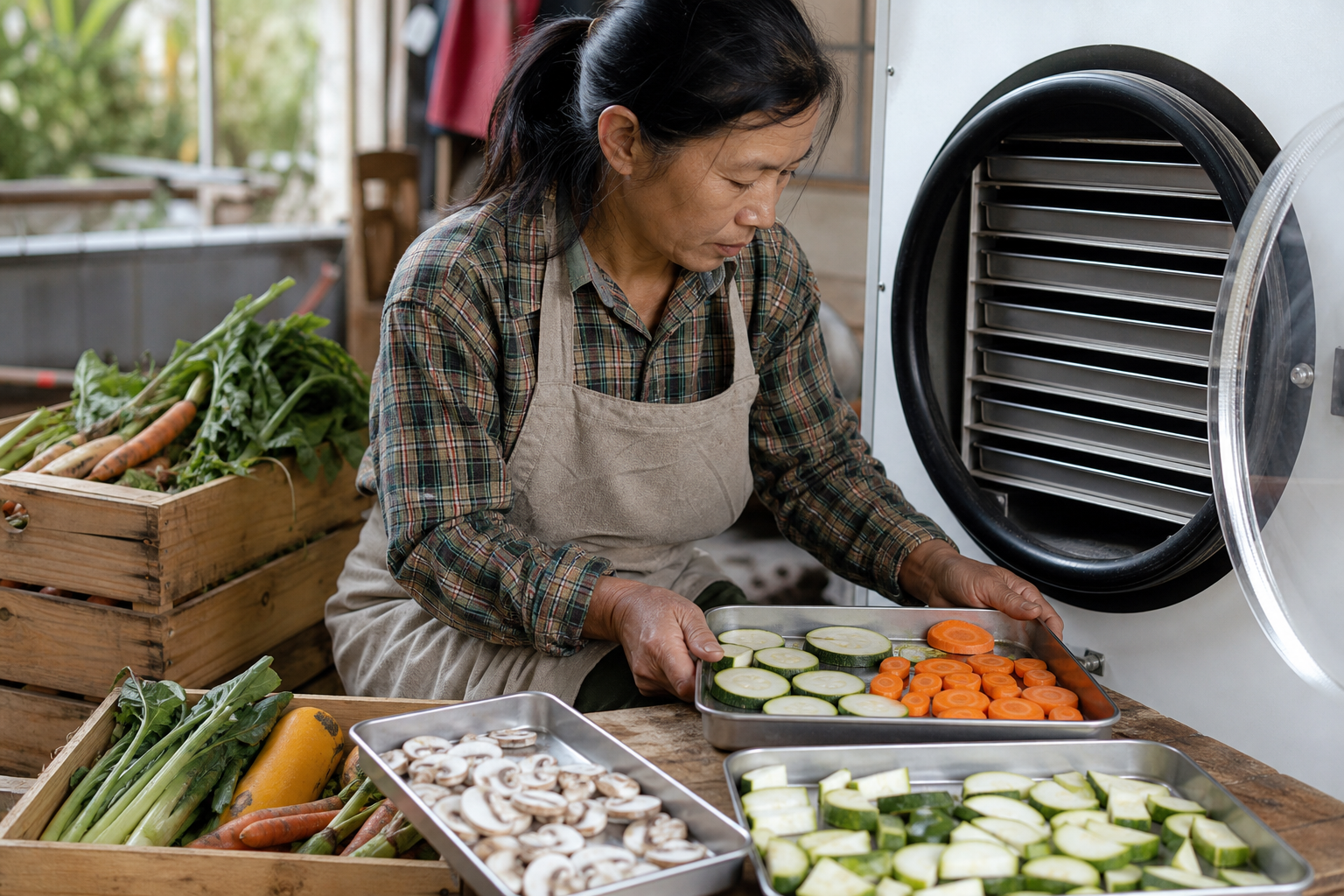
Machines like the ones covered in our Harvest Right review quote 25 years too, and the number is achievable, but the variables are now yours. Two of them decide almost everything:
- Residual moisture. A batch pulled early — thick slices, a full tray, an impatient operator — comes out at 5 or 6 percent instead of 2. It feels dry and it is not. That batch will brown and go off in a few years, not decades, and there is no way to tell by looking. Weighing trays before and after is the only real check.
- The seal. A home impulse sealer on a Mylar bag is good but it is not a double-seamed can. Add an appropriately sized absorber and expect ten to fifteen years as a realistic planning figure rather than thirty.
None of that argues against a home machine — the economics are covered in when a freeze dryer pays and when it does not. It argues against writing “2051” on the bag.
How to tell when it has gone
There is no dramatic failure. Look for these instead:
- Pieces that have gone soft, sticky or clumped together — that is absorbed moisture, and it is the one that matters most.
- A crayon, cardboard or old-oil smell on opening, especially in meat, eggs or anything with dairy. That is rancidity and it will not cook out.
- Browning in light-colored fruit and vegetables well beyond how they went in.
- Any bulged can, any rust through, any visible mold: discard without tasting.
Food that is merely old — dry, correct-smelling, a bit faded — is generally safe and nutritionally thinner than it was. Vitamin C and A decline measurably over years even in a perfect can, which is another argument for keeping some fresh produce, a garden, or at minimum a bottle of multivitamins in the plan.
How I would buy it
Freeze dried food is the most expensive calorie in a storage plan and the most convenient one. That combination makes it a poor base layer and an excellent top layer. Build the bulk out of sealed grain and legumes, then use freeze dried cans for the things grain cannot do — fruit, vegetables, meat, milk — and use pouches for the first week of a disruption when nobody wants to cook. Buy cans in a size your household finishes in six months, write the purchase date on the lid in marker, and store the lot somewhere that never goes above about 70°F. Temperature is free and it does more for shelf life than anything else on the label. If you want ideas for what to cook out of the resulting shelf, The Lost SuperFoods is aimed at that side of the problem, though it deals with traditional preserving rather than freeze drying.
Amazon affiliate links follow. As an Amazon Associate I earn from qualifying purchases, at no extra cost to you. Details
ShieldPro 5-mil 1-gallon mylar bags on Amazon →
500 cc oxygen absorbers on Amazon →
As an Amazon Associate I earn from qualifying purchases.
Frequently Asked Questions
Does freeze dried food ever really go bad?
It rarely becomes dangerous while it stays dry — it becomes rancid, faded and low in vitamins. Danger comes from moisture getting in, which is a packaging failure rather than an age problem.
How long do freeze dried meals last after opening the pouch?
A single-serving pouch is designed to be eaten in one sitting. Once rehydrated, treat it exactly like a cooked meal: a couple of hours at room temperature, a day or two refrigerated.
Is freeze dried better than dehydrated for long storage?
Yes, for shelf life, because it reaches lower residual moisture and keeps its texture. Dehydrated food is cheaper per calorie and stores well for years rather than decades.
Can freeze dried food be stored in a garage?
It can, and you should expect to cut the quoted shelf life substantially. Summer heat in an unconditioned garage runs the oxidation reactions fast, and cans that go through big temperature swings are more likely to lose their seal.
What to Read Next
- Home freeze dryer: when it pays and when it doesn’t
- Food storage calculator: pounds per person per year
- How long food lasts in a freezer without power
- The Food Storage hub
Reader support keeps this site running. Some links above are affiliate links and can earn us a commission if you buy — the price you pay is unchanged, and so is what we say about the product. The affiliate disclosure has the details.