
A Quarter Acre, Honestly
Grow Your Own
Chickens, greenhouses, vegetable beds and aquaponics — what a small piece of land actually produces, and what it costs to get there.
Ron and Johanna’s account of forty years off-grid, with build details for a self-heating greenhouse, a chicken coop, a three-barrel rainwater system and a root cellar.
Affiliate link: we earn a commission if you buy, at no extra cost to you. The description above comes from the seller’s own page and we have not independently verified it. Details
See what’s inside →The honest answer to “can a quarter acre feed my family” is no, not on its own, and that is fine. What a small piece of land does well is replace the expensive, perishable, hard-to-store part of the grocery list — eggs, greens, tomatoes, herbs, squash — while the calories keep coming from the pantry. Plan around that and a garden is a genuine asset. Plan around self-sufficiency and you will be disappointed in August.
Where a home food system actually breaks
Growing food is not one system; it is four, and they fail in different ways. Water is the first: a garden in July needs roughly an inch of water a week, which on 1,000 square feet is about 600 gallons — a serious draw if your well pump has no power. Second is season length, because a bed that produces beautifully from June to September gives you nothing in February. Third is storage, since a glut of zucchini has no value unless you can preserve it. Fourth is labor, which is the one nobody budgets for and the one that ends most first-year gardens.
That is also the order in which to solve them. Irrigation and mulch before more beds. Season extension before more varieties. Preservation capacity before a bigger harvest. See Water for supply and Food Storage for what to do with the surplus.
What each option really produces
| System | Rough setup cost | Realistic annual output |
|---|---|---|
| Six laying hens | $600-$1,500 coop and birds | 1,000-1,400 eggs, dropping sharply in winter |
| Four raised beds, 4×8 ft | $400-$900 | 150-300 lb of vegetables in a good year |
| Unheated hoop house, 10×20 ft | $700-$2,500 | Adds 4-8 weeks at each end of the season |
| Backyard aquaponics, small | $500-$2,000 | Greens year-round; fish are slow and fiddly |
| Potato and winter squash patch | under $100 in seed | The only real calorie crops on this list |
Two figures deserve emphasis. Hens lay far less in winter without supplemental light, so the flock that gives you five eggs a day in June may give you one in December. And aquaponics depends on a pump running continuously — lose power for long enough and the fish die first, then the bacterial colony that makes the whole thing work. It is an elegant system with a single point of failure, which is worth knowing before you build one.
A sensible first two years
- Year one: two or three beds of things you genuinely eat, drip irrigation, heavy mulch, and a compost pile. Learn your frost dates and your soil before spending more.
- Add hens once the garden survives a season. They need daily attention, predator-proof housing and a plan for who feeds them when you travel — the coop is the easy part.
- Then season extension. A low tunnel or a hoop house buys more food per dollar than another bed in most climates.
- Grow a medicinal and culinary herb bed alongside. Cheap, low effort and useful in the kitchen. Herbs are a garden project, not a substitute for medical care — see Health & Safety.
- Keep open-pollinated seed. Hybrids do not come true from saved seed, which matters if resupply is part of the point.
How this connects to the rest of the house
A greenhouse against a south wall is a heat question as much as a growing one, and the same thermal mass logic appears in Heat & Cold. A root cellar sits at the intersection of the building and the pantry, covered in The House. If irrigation would depend on your well pump, that draw belongs in the load audit at Power & Backup. And if you are still deciding what to tackle first, Start Here puts growing food where it belongs — after the systems that keep you warm and hydrated.
Latest in this section
- Seasoning Firewood That Burns Clean and Hot
 Firewood seasoning done right: 20 percent moisture, a year in the stack, and how wet wood becomes creosote. Stacking, covering, and what dries fastest.
 - Seed Saving Basics for Next Year’s Garden
 Seed saving basics: which crops come true, which cross, how dry is dry enough, and how many years each kind stays viable. Start with the easy four.
 - Cold Frames: Winter Greens Without a Greenhouse
 A cold frame gives you winter greens for about $60 and one afternoon. The build, the orientation, and the venting habit that stops you cooking the crop.
 - Quarter Acre Food Plan: What It Can Actually Feed
 A quarter acre food plan with the calorie math done honestly: how far potatoes beat lettuce, how many hours it really costs, and what it will not feed.
 - Passive Solar Greenhouse: What It Really Grows
 A passive solar greenhouse will not grow tomatoes in January, and here is the physics of why. What it does extend, what mass to add, and what it costs.
 - Keeping Chickens Warm Without a Heat Lamp
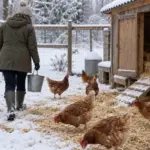 Keeping chickens warm in winter without a heat lamp: why damp causes frostbite, how to ventilate without draughts, and the fire risk nobody mentions until after.
 - How Much Space Do Chickens Need? Coop and Run
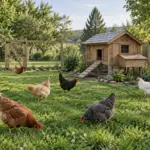 Square feet per bird inside, square feet in the run, inches of roost and how many nest boxes — with the winter confinement math that decides all four numbers.
 - Backyard Chicken Coop: Size, Design, Costly Mistakes
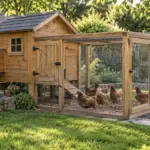 A backyard chicken coop that works: square feet per bird, roost and nest box numbers, and the winter ventilation mistake that causes frostbite.
 - Backyard Chicken Cost: Do Eggs Pay for Themselves?
 The real backyard chicken cost, with feed pounds, eggs per hen and an honest break-even table. Six hens rarely pay off the coop, and here is why.
Failsafe Home is reader-supported. Some links on this page may earn us a commission at no extra cost to you. It never changes what we recommend or what we leave out. See our affiliate disclosure.