
Watts And Watt-Hours
Power & Backup
Sizing, generators, transfer switches and battery stations — decided by arithmetic rather than by the number printed on the box.
Backup power is the step everyone starts with and the one most often bought wrong. The wrong purchase is almost always the same mistake: choosing by the biggest number on the label instead of by two numbers from your own house. This section is about getting those two numbers and then spending accordingly.
Running watts and starting watts are different problems
Anything with a motor — the well pump, the freezer compressor, the furnace blower, a sump pump — pulls a brief surge when it starts, often three to six times its running draw. A 1/2 HP submersible well pump might run on 800-1,000 W but demand 2,000-3,000 W for a fraction of a second at startup. If your inverter or generator cannot supply that surge, the pump does not start and the unit either trips or stalls. This single fact explains most of the disappointed reviews you will read about small battery stations.
The second number is energy, not power: watt-hours per day. A refrigerator that draws 150 W does not draw it continuously; it cycles, and over 24 hours it typically consumes about 1-2 kWh. Power decides whether a device will run. Energy decides how long. You need both, and a $25 plug-in meter gives you the honest version instead of the sticker version.
What a typical house actually asks for
Rough figures at the time of writing, for common residential equipment. Measure yours; treat these as the shape of the problem rather than as your answer.
| Load | Running watts | Startup surge | Energy per day |
|---|---|---|---|
| Refrigerator | 100-200 W | 600-1,200 W | 1-2 kWh |
| Chest freezer | 80-150 W | 500-1,000 W | 0.8-1.5 kWh |
| Well pump, 1/2 HP | 800-1,000 W | 2,000-3,000 W | 0.3-1 kWh (usage dependent) |
| Gas furnace blower | 300-600 W | 1,000-2,000 W | 1-4 kWh in cold weather |
| LED lighting, whole house | 40-100 W | none | 0.3-0.6 kWh |
| Router, phones, laptop | 30-80 W | none | 0.3-0.8 kWh |
Add up only the loads that genuinely matter and you usually land between 3 and 8 kWh per day for a “keep the essentials alive” scenario, with a peak requirement set by whichever motor is largest. Try to include electric heat, an electric range or a well pump running on demand and the number climbs fast — which is the point at which portable equipment stops being the answer.
Three ways to solve it, and who each one suits
- Battery power station. Silent, safe indoors, no fuel. Roughly $300-$1,500 for 0.5-2 kWh of usable capacity at the time of writing. Excellent for a refrigerator, lights and communications; usually not enough for a well pump or resistance heat unless you buy a large unit with a high surge rating. Recharges from solar or from the grid between outages.
- Portable inverter generator. Around $500-$2,000 for 2,200-7,500 W. Runs motors, refuels in minutes, and needs to be outdoors and away from windows without exception. Fuel logistics are the weak point: a multi-day outage means storing and rotating gasoline, or converting to propane.
- Standby generator on an automatic transfer switch. Commonly $4,000-$12,000 installed depending on size and gas supply. Starts on its own, runs on propane or natural gas, and covers the whole house or a selected panel. The right answer for a well-and-septic home in a region with regular multi-day outages, and overkill almost everywhere else.
Getting power into the house legally
Extension cords through a window work for a refrigerator and nothing else. Anything hardwired — well pump, furnace, septic pump — needs either a manual transfer switch or a panel interlock kit, installed to code. Both do the same essential job: they make it physically impossible for generator output to reach the utility line, which is what protects the crew working on the pole down the road. Backfeeding through a dryer outlet is illegal, and it is the one shortcut in home backup power that has actually killed people.
An interlock kit is the cheaper option, typically a few hundred dollars installed, and it lets you use any breaker in the panel. A transfer switch with a dedicated subpanel costs more and is simpler to operate under stress at 2 a.m., which is worth something.
Where power meets everything else
Sizing decisions here cascade. If you conclude that running the well pump on backup power is impractical, then stored water and a manual pump move up the priority list — see Water. If your furnace blower is the largest load, a non-electric heat source may be cheaper than a bigger generator, covered in Heat & Cold. If you have a pumped septic system, factor that in at Sanitation. For how these systems interlock in a specific house, see The House, and if you have not done the load audit yet, go back to Start Here.
Two more things worth saying plainly. Solar panels alone do nothing in an outage: a grid-tied array without batteries shuts down when the grid goes down, by design. And “free energy” generators do not exist — if a product claims to produce more energy than it consumes, it is a scam, without exception.
Latest in this section
- How Many Watts Does a House Use? Three Backup Profiles
 How many watts to run a house in a blackout: essentials-only is about 1.5 kW running, a comfortable house about 4.5 kW, electric heat or AC 12 kW and up. Worked totals.
 - Generator Interlock Kit by Panel: Square D, Siemens, Eaton, GE
 Which generator interlock kit fits your panel? Square D QO vs Homeline, Siemens and Murray, Eaton BR vs CH and GE: how to read the panel label and what to do when no kit exists.
 - A UPS for the Home Office and Network
 A UPS for the home office buys minutes, not hours. VA versus watts, real runtime numbers, what belongs on it, and when a power station is the better buy.
 - Sizing Solar Panels to Refill Your Battery
 Sizing solar panels comes down to peak sun hours and derate, not sticker watts. Here is the arithmetic, winter numbers by region, and a worked example.
 - How Long a Generator Runs on a Tank
 How long a generator runs on a tank depends on load, not the spec sheet. Real burn rates, the arithmetic, and how much fuel a three-day outage takes.
 - Generator Maintenance That Prevents Dead Starts
 Generator maintenance is mostly fuel discipline. The intervals that matter, the carburetor habit that saves a no-start, and what to do before storage.
 - Store Gasoline Long Term for a Generator Safely
 How to store gasoline long term for a generator: real shelf life with and without stabilizer, phase separation, container rules and how much you can keep.
 - Starlink Off Grid Power: Watts, Batteries, Runtime
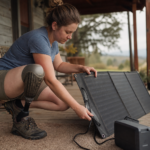 Starlink off grid power comes down to watt-hours per day, not peak watts. Real draw figures, battery sizing, DC wiring and the solar array it needs.
 - Jackery vs EcoFlow for Home Backup
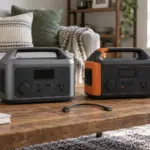 Jackery vs EcoFlow for home backup, compared on continuous output, cell chemistry, recharge time and warranty. Where each one loses, not just where it wins.