
One Warm Room
Heat & Cold
Keeping one room habitable and the plumbing intact when the furnace has no power — and doing it without poisoning anyone.
The first surprise for most people is that a gas furnace stops working in a power outage. The fuel is still there; what is missing is the electricity for the blower, the igniter and the control board. Same for a propane boiler with a circulator pump, and same for a pellet stove, which is a gas appliance with an auger and a fan. Almost every modern heating system in an American house is an electrical appliance that happens to burn something.
The real threat is the plumbing, not the discomfort
A healthy adult in a sleeping bag can tolerate a 45°F house for days. Copper and PEX cannot. Water expands as it freezes, splits a line in an exterior wall or an unheated crawlspace, and then does its real damage when the heat comes back on and the split line starts pouring. That repair — plumbing plus drywall plus flooring plus whatever the water touched on the way down — routinely runs into thousands of dollars, which makes it the single most expensive failure in this entire section.
How fast a house cools depends on insulation, wind and starting temperature, but a rough rule for a reasonably insulated house in still air is a drop of about 1-2°F per hour with outdoor temperatures in the teens. That gives you somewhere between one and two days before interior pipes are at risk — long enough to act, short enough that the decision needs to be made before the outage, not during it.
Options for heat without the grid
| Source | Rough cost at the time of writing | Notes |
|---|---|---|
| Indoor-rated propane heater (Mr. Heater class) | $100-$200 | 4,000-18,000 BTU; needs an oxygen depletion sensor and cracked ventilation |
| Vented kerosene or propane wall heater (Dyna-Glo class) | $300-$800 plus install | Vents combustion outside; the safer permanent option |
| Wood stove | $2,500-$6,000 installed with chimney | Works with zero electricity; needs seasoned wood and annual chimney cleaning |
| Generator running the existing furnace | see Power & Backup | Blower is often 300-600 W running, 1,000-2,000 W at startup |
| Insulation, weatherstripping, thermal curtains | $100-$600 | Reduces the size of every other solution, permanently |
Note where the best value sits. A generator large enough to run a furnace blower solves the problem elegantly and costs more than a wood stove’s annual firewood for a decade. A $200 indoor-rated propane heater plus $300 of air sealing solves it adequately and buys you the ability to keep one room at 60°F on a 20 lb tank for a couple of days. Which is right depends on how often your area actually loses power for more than 24 hours in winter.
Safety: Carbon monoxide has no smell and no color, and it kills people every winter who were only trying to stay warm. Never run a generator, charcoal grill, camp stove or unvented kerosene heater inside a house, a garage or a porch. Use only heaters explicitly rated for indoor use, keep a window cracked, and put battery-backed CO alarms on every level and outside every sleeping area.
Protecting the pipes
- Know where your main shutoff is and make sure it turns. If you leave the house in a cold outage, shutting off and draining is the cheapest insurance there is.
- Open cabinet doors under sinks on exterior walls so room air reaches the supply lines.
- Let a faucet drip on the most vulnerable run. Moving water resists freezing and a dripping line relieves the pressure that actually splits pipes.
- Insulate the exposed runs now — crawlspace, garage, exterior walls, well head. Foam sleeve is a few dollars a length and it never needs a battery.
- Close off the rest of the house. Pick one room with the fewest exterior walls, hang blankets over doorways, and heat that. Heating 200 square feet is a different problem from heating 2,000.
Where this connects
If freezing forces you to drain the system, your stored water becomes the whole supply — see Water. Heating decisions also determine whether a generator needs to cover the furnace blower, which changes the sizing in Power & Backup. Hypothermia and carbon monoxide poisoning are covered in Health & Safety, the building envelope in The House, and how long you should plan to hold out in By Scenario. Working through the plan in sequence? Go back to Start Here.
Latest in this section
- Seasoning Firewood That Burns Clean and Hot
 Firewood seasoning done right: 20 percent moisture, a year in the stack, and how wet wood becomes creosote. Stacking, covering, and what dries fastest.
 - Cold Frames: Winter Greens Without a Greenhouse
 A cold frame gives you winter greens for about $60 and one afternoon. The build, the orientation, and the venting habit that stops you cooking the crop.
 - Keeping Chickens Warm Without a Heat Lamp
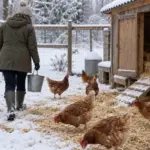 Keeping chickens warm in winter without a heat lamp: why damp causes frostbite, how to ventilate without draughts, and the fire risk nobody mentions until after.
 - Wood Stove Heating as a Real Backup Heat Source
 A wood stove is the only heat in the house that needs no electricity. Here is the BTU math, how much wood a week it really burns, and which houses it suits.
 - Wood Stove Installation Cost: Line-by-Line Ranges
 Wood stove installation cost is mostly chimney and labor, not the stove. Line-by-line ranges, the clearances that drive price, and where the tax credit went.
 - Prevent Frozen Pipes When You Have No Heat
 Pipes rarely burst where the ice forms. Here is the pressure mechanism behind it, which faucets to drip, and when to stop dripping and drain the house.
 - Indoor Propane Heater Safety: When It’s Safe to Run
 Indoor propane heaters are safe under narrow conditions: an ODS burner, real ventilation, and a CO alarm. Here is what the CPSC test data actually shows.